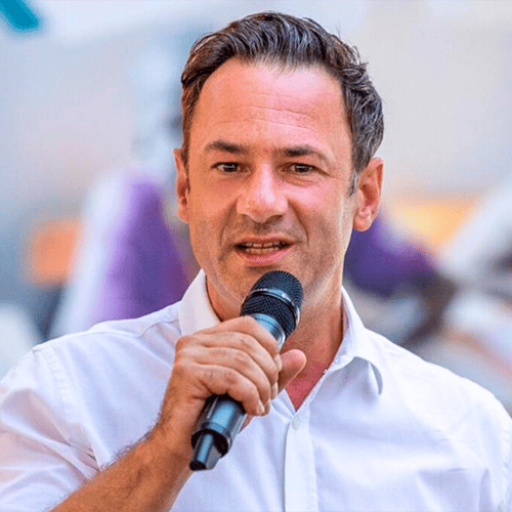
#TalkMarTechToMe – Interview with Maximilian Steudel from Dr. Oetker

How do you establish a MarTech unit at a corporate? That’s the task currently occupying Maximilian Steudel as MarTech & Digital Engagement Lead at Dr. Oetker. This makes him an ideal interview partner – and you can look forward to MarTech insights fresh from the oven, straight from real-world practice!

A

nything but frozen structures: Dr. Oetker has always been one of the visionaries and pioneers of modern marketing. More than 130 years ago, the company practically invented content marketing when, in 1891, it printed recipes on its baking powder packets. Dr. Oetker continues this tradition of innovation to this day: more than a year ago, the company set up its own MarTech unit as a link between marketing and IT – still quite a rarity in German corporations.

This makes Maximilian Steudel one of the rare experts in the German-speaking world who already has “MarTech” on his LinkedIn profile on the corporate side. Specifically, he is “MarTech & Digital Engagement Lead” at Dr. Oetker in Bielefeld. During his studies, Matchilla CEO René Kühn could “smell” from his apartment on Bielefeld’s Johannisberg when Oetker was producing something with vanilla again. So, the conversation with Maximilian was for him a journey back into the past and, at the same time, into the future of marketing. The two spoke at length about how to establish MarTech in large companies with fixed structures, what tasks his MarTech unit has, and how they go about selecting new technologies.

René Kühn: Dear Maximilian, you’ve been responsible for MarTech topics at Dr. Oetker for over a year now. Let’s start our conversation straight away with a conclusion: Can a corporate really be so disruptive and lean in one year as to establish MarTech internally?

Maximilian Steudel: Very clearly, yes. But I’m not solely responsible for that. The Oetker Group recognized several years ago how important it is to push the company’s digital transformation. This is shown, among other things, by the establishment of Oetker Digital in Berlin or the acquisition of Flaschenpost in 2020. In parallel, we adapted our organizational structure to become more agile, but at the moment we’re still not as lean as a disruptive start-up. In my view, that’s perfectly fine. Transformation is always change, and that means respecting existing processes and taking all relevant stakeholders along on the journey. After all, MarTech is a field that requires a lot of explanation.

René Kühn: Many corporates out there are currently facing the challenge of how such a specialized MarTech unit can be integrated into the company’s structures. You’re already putting this into practice. What does your scope of responsibilities look like? Who do you report to? And who uses your expertise?

Maximilian Steudel: We’re part of the Marketing Excellence division within International Marketing and report directly to our Executive Manager. We also work very closely with our CMO. The MarTech team consists of five colleagues, but I see us more as a large interdisciplinary initiative, made up of Marketing, Tech, Data, and external implementation partners. Fundamentally, we develop and implement our global B2C MarTech stack with a strong focus on Digital Marketing Excellence across more than 40 national subsidiaries.

René Kühn: So you’re, in a way, a service unit for all the other departments? Please take a guess at how many of your resources flow into the various tasks.

Maximilian Steudel: No, I don’t see us as a service unit. We see ourselves as partners to our more than 40 local markets, with the clear mission of playing a decisive, strategic—and above all proactive—role in shaping Dr. Oetker’s digital transformation, while taking into account the interests of all other departments. Our task allocation varies depending on current projects, so a blanket answer in terms of resource allocation isn’t possible.

René Kühn: From your perspective, which skills are required on the one hand as MarTech lead and on the other hand for your team members? Have you personally always had a passion for technology?

Maximilian Steudel: Fundamentally, everyone on the team should have a very good understanding of digital marketing and the associated technologies. Specialization in one or more areas, such as Data Analytics, Performance Marketing, or Data Engineering, also makes sense. This strengthens different perspectives and helps meet the complex challenges in the MarTech environment. I’m a big fan of M-shaped multi-skill profiles, which in my experience bring a high willingness to think cross-functionally. That’s absolutely necessary, because our projects have an impact across the entire organization. In addition to operational skills, though, it’s primarily about the right mindset. We’re all extremely enthusiastic about technology and bring both a pronounced growth mindset and a strong affinity for data and digital.

As a lead, I always try to lead by example and pass on my passion for tech, which has gradually developed over the last few years, to others. While I initially financed my studies as a freelancer with UX and UI projects, I later gained a lot of hands-on experience in the areas of performance marketing, Data, A/B-Testing, and also TV advertising in agencies and e-commerce companies. That helps me a lot today, because it has given me a very good understanding of the interplay between business, tech, and media.

René Kühn: A practical example from your daily business—one of the most in-demand systems in marketing right now: You recently decided on a CDP. Can you briefly outline how you organized the vendor selection process? And: How did you determine the need for a new platform in the first place?

Maximilian Steudel: A system that systematically captures all customer data and interactions is, in my opinion, a logical first step for many companies of our size. Fragmented data storage impairs the customer experience and hinders data-driven decision-making—two building blocks that, in my view, are essential for future-proof companies. The CDP is not the only technology we are introducing in this context, but it is one of our core applications and therefore plays an important role in our MarTech target picture.


Scoring Sheet

For such central technologies, it is absolutely necessary to carry out a structured assessment of service providers—not least because our planning is geared toward the long term and decisions in this area cannot always be easily corrected. For this, we use a vendor scoring sheet in which we capture various dimensions according to which we evaluate each provider’s solution. Important parameters can be costs, capabilities, implementation effort, or support, which we weight differently depending on priority. We conduct the evaluation independently of one another and together with selected stakeholders in order to achieve the most objective result possible. In the end, the highest score decides.

René Kühn: What was the biggest pain point in the process? Or is that still to come with the implementation of the CDP?

Maximilian Steudel: The biggest challenge is certainly the initial implementation of the individual components, including defining data flows and an overarching consumer data model while ensuring compliance with data protection regulations. Scaling the architecture to additional countries, on the other hand, is very well planned—even though we regularly face market-specific requirements.

René Kühn: Once the CDP or another solution has been implemented: When and how do you measure whether the investment has paid off?

Maximilian Steudel: We try to measure the performance of our MarTech activities continuously, even though it’s often not easy to quantify success in a transparent way. Normally, we start with a business case based on an MVP or PoC that incorporates both real results and further hypotheses in order to minimize investment risk. We define the KPIs by which we assess success jointly at the outset with our senior management and controlling. Mutual commitment is important in order to pursue a shared goal. The latter depends heavily on the respective solution and can take different forms, such as ROI, brand lift, or even proprietary micro-conversions.

René Kühn: How often do you put your MarTech stack to the test? What are the main reasons for replacing or adding software?

Maximilian Steudel: Very important point. The continuous evaluation described helps us quickly recognize when solutions are not performing as planned. This is very rare due to the detailed planning at the beginning, but it can happen—especially since, as a central team, we cannot know all local processes and requirements of every country in detail. Typical causes are technical limitations or poor data quality. So far, there has been no need to swap out software from our stack, because we have always been able to solve the challenges together. However, it can’t be prevented permanently—we have to be aware of that.

Much more often, we expand our stack with new functions. Structured gap analyses help us here, as do impulses from our markets that have already implemented local technologies in the past to solve certain tasks. If the latter are also attractive for other countries, we integrate them into our stack. If not, we consolidate. The basic rule is: Everything outside our core applications is negotiable as long as we jointly recognize value for our MarTech stack

MarTech Unit

René Kühn: What pitfalls can you warn about when a MarTech unit is to be set up? What would you do differently today?

Maximilian Steudel: MarTech requires a lot of explanation. So it’s not enough to just change organizational structures. Rather, it’s about formulating a long-term strategy that includes everyone involved. In doing so, we as a MarTech unit have to accept that change takes time, because companies only have limited capacity to absorb new processes (see Scott Brinker’s Martec’s Law). For us, that means we have to weigh up very carefully which technologies we prioritize and how we enable our markets to use them profitably. We’ve done this very well in the past, even if we didn’t think everything through as fully integrated from the outset. What I’ve learned over the last two years is that the success of a MarTech unit isn’t based solely on operational capabilities or monetary return, but especially on the talent to identify the right technologies and to inspire the company to introduce and use them.


René Kühn: Suppose that next year an artificial intelligence becomes established at Dr. Oetker. What product does it create—or, to put it differently: can the fish finger pizza be topped? Does it send the new product directly to end consumers via the collected CDP data?

Maximilian Steudel: Very good idea! Noted. Co-creation and personalization are both super exciting topics. Maybe we’ll soon establish an AI that automatically sends you new pizzas via subscription as soon as your freezer is empty and, based on other foods in your fridge, learns which ingredients you like best. I can already see Schokopizza 2.0 coming. 😉


René Kühn: Maximilian, many thanks for the many insights. We’ll be watching how many German corporates follow your example of a MarTech unit—if it goes similarly to content marketing… 😉

Picture of Maximilian Steudel
Maximilian Steudel

Maximilian is MarTech and Digital Engagement Lead in the area of International Marketing Excellence at Dr. Oetker, one of Europe’s leading food producers. Together with his team, he is responsible for the global MarTech infrastructure in over 40 countries and implements solutions that play a decisive role in shaping the Group’s digital transformation.

Before Maximilian joined Dr. Oetker, he worked for various innovative companies in e-commerce. With Triple A Internetshops, he led several platforms into the top 100 most successful online shops, and at GastroHero he helped build the marketing of what was at times Germany’s fastest-growing B2B company.

More MarTech articles from the Matchilla MatchZINE

Match me if you can!

Matchilla revolutionizes the selection of new service providers with an efficient combination of data, algorithms and personal expertise. Try out Matchilla for free and without obligation and let matching on our platform become one of your favorite activities.